Sunday, February 12, 2017

Post #3


I'd like to take a minute to revert back to my blog post from two weeks ago.


MCR's 2006 album, The Black Parade not only catapulted the band to smash hit success, but it also brought lots of new fans to their fanbase. This was in part due to their performance at the 2006 VMAs on MTV and also due to the fact MCR was getting more mainstream radio play. I believe this caused a seige of younger listeners to find themselves listening to the band, merely because their music was upbeat & catchy, while remaining unaware of the dark lyrical content being sung about.

The album is filled with "tragic lyrics" which "focus on the protagonist's self consummation, sense of hopelessness and attempt to cope with fate." (Sellnow 175) The album has both "intensity patterns and release patterns," (Sellnow, 172) depending on the song the listener is listening to. For example, the song, Disenchanted, a song embodying regret uses release patterns, while the song, Sleep uses intensity patterns, along with incongruity. The song, Sleep is about dying. On the distorted introduction tape recording, The Patient, voiced by Gerard, states: "it's not tremors, worse then tremors, they're these terrors, it feels like someone is gripping my throat, squeezing and..." The recording is purposely cut off and interrupted by the music, as if to represent The Patient's dying. His life has been interrupted, the way the tape recording has been interrupted by this disease. It, bam, occurs, the way the music bam, occurs. It is also important to note that the tape recording is repeated. I believe this is done to express the paranoia accompanied with fear of dying soon. The patient knows he's dying soon. The repetition of the distorted tape reflects his being gripped by the fear of death, continuously thinking over & over about it. The music represents his giving into death. The music acts as a type of "paralanguage" (Sellnow, 172) transitioning to the act of dying. The song is, in a sense, a transition. The song pairs tragic lyrics "augmented' within a poetic illusion. The poetic illusion helps to enforce the intensity pattern, however the poetic illusion shifts from poetic to dramatic as the chorus approaches. The song illuminates the process of dying. In the beginning of the song, he accepts his fate, mid song he dies, and at the end it's over, he's dead. The mid song representation of death is represented by the tape recording is replayed. This time, The Patient admits to seeing flames & seeing "people that he loves dying," indicating that now, at this moment, his soul is going to hell, he is dying & he is seeing everyone in his life fading away (dying) Instead of feeling paranoid, and putting off his fear, as he initially did, he gives into the heart wrenching experience of letting go of life. It's intense. Essentially, the music serves to remind the listener, that the entire song has come down to this, reflective of the idea that your life builds & builds but it all comes down to death. The mid point in the song makes you, the listener feel all sorts of screaming emotions. The crashing crescendo, reflects the listeners and the Patient's emotions, fully embracing the intensity patterns. At this point, the listener and the Patient are one, essentially. All the emotions that the Patient and the listener were experiencing, all the rage, anger, and angst are finally released through Gerard's screams, and the intensity patterns of the song. The song ends with the return of the tape recording, this time with the tape saying: "I can't ever wake up." The Patient is dead. The heart-wrenching process of dying is over with the last note of the song.You, as the listener, were there for the entire cathartic experience.

A lot of songs on the album feature incongruity. When incongruity occurs, fanbases are broadened, but song meaning can become misinterpreted. I believe this happened with a lot of songs on the album, and thus being part of the reason MCR attracted a younger fanbase. To, the younger fan, and by younger I mean, 9-12 y/o. A younger fan could misinterpret a song like Sleep to be dreams, nightmares, and sleep, itself. They are likely to have to no idea the song is about death as sleep.


I think that not understanding what the song is really about definitely effects a listeners listening experience. Fortunately for me, the first time I heard Sleep, and all of the songs on the album, I was an older teenager. I was able to understand exactly what Gerard was going for.

While music as communication invites us all to have our own interpretation, and own unique meaning of a musical work, I believe musical rhetoric can be lost when not played to the right audience. If the music is not addressed to the right audience, the rhetorical argument has lost its value. This is why broadening a fanbase can be a bad thing, as much as it is a good thing.


The album uses both lyrical & musical ascription (Sellnow, 180) targeting the lyrics and music at a specific audience. The album is most likely to be enjoyed by a more theatrical person, someone who has an appreciation for the overdramatic, as the album is very overdramatic. Gerard & Company knew this, and purposely made their album a rocking, goth-infused drama to target the "drama/theater high school kids" who are usually nine times out of ten, punk or goth themselves. As listeners of the album, we know that everything the album deals with thematically has been way overdramatized, but that's part of the appeal of the album. By being overdramatic, it makes its listeners feel as if, well, you see, if you thought you had it bad, listen to this. As listeners, we buy into the albums story, we accept the experience of both life and death as a heart-wrenching horror story that has the capacity to make you scream, cry, and even maybe, smile all at the same time. That's what "The Black Parade" accomplishes. It reminds us that life is part of death, and death is part of life, so make a bunch of mixed memories now, because one day, it all ends, and you don't want to be like The Patient, regretting everything right up until the very end. I think that's ultimately the message that the album sends. It's almost as if the entire album is an example of how not to live your life, because if you live this way, regardless of your fate, regardless of what you die of, you're going to end up like The Patient on your deathbed. And you don't want to be in that state of regret.




Sunday, February 5, 2017

Mean Girls & the power of Neo-Marxist Rhetorical Perspective

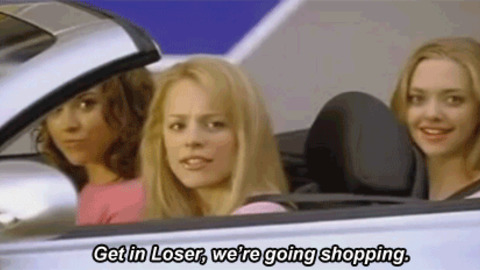
Every so often, a movie comes out that defines a generation. Mean Girls was one of those "definitive" movies of the 2000s that reminded us of the horrors of high school cliques. Of course, the movie didn't start out the way. Actually, within the first 10 minutes of the movie, the movie watcher may think Cady is fortunate to have been selected by the Plastics to sit with them. I remember the very first time I saw Mean Girls, I thought "wow, I wish I had been chosen by the popular girls to sit with them when I came new to my high school." And by the way, I totally related to the whole "new girl" status-thing because I, myself, had moved in high school, and was the "new girl." However, my first day at lunch didn't exactly involve being chosen by the popular clique to sit with them, so I always felt that Cady was extremely privledged to be bestowed with such an opportunity. Cady should find her status empowering, but as the movie progresses we realize that life in the Queenbee's court isn't so amazing after all.

In other words, Mean Girls just so happens to be a shining example of neo-marxist rhetorical perspective. Here's why.

Neo-marxist perpsective exposes "how material conditions & economic practices shape dominant ideology regarding taken-for-granted assumptions about who ought to be and who ought not to be empowered." (Sellnow, 115 ) Neo marxism is all about ideology, that things ought to be a certain way based on "taken-for granted norms & values." (Sellnow, 117) Hegemony privileges a "dominant group's ideology over the that of other groups." (Sellnow, 117) Critical rhetoric frees the individuals who are not empowered by exposing truths about "how the norms, practices, and values of the dominant group are oppressing them." (Sellnow, 117) Whenever someone seeks to "challenge the status quo in terms of power" (Sellnow, 118) their actions are "percieved as abnormal, undesirable, or even wrong." (Sellnow, 118)

In terms of Mean Girls, the hegemony is the popular clique. Their group's ideology is dominant all over the school. The movie script uses critical rhetoric to expose truths about how the dominant group is oppressing the other group (the non popular) In the case of the movie, Cady's character uses critical rhetoric to expose truths about "how the norms, practices and values of the dominant group" are oppressing her, and others.


Preferred readings reinforce "the status quo ideology about empowerment by proposing taken-for-granted assumptions as common sense." (Sellnow, 119) In other words, when we watch a TV show, or see movies we (the audience) expect the good looking couple to automatically live in a nice home, drive a nice car, etc. We automatically percieve that as normal without thinking twice about it. Sometimes, the "ideological argument about empowerment is couched within what seems to be-at least at the surface-an oppositional argument."(Sellnow, 119)

In the case of Mean Girls, we (the audience) expect the popular girls to be nice, and to be friends-til-the-end with each other. We take it for granted that the popular girls have the good looking boyfriends, drive nice cars, have manicured nails and expensive clothes, etc.


The movie uses "occluded preferred readings" ( Sellnow, 119) to make an oppositional argument about empowerment. In the case of the movie, Cady is empowered by exposing the truths of the clique. She provides the audience with an "alternative worldview about empowerment." (Sellnow, 119) She does not thrive in the popular clique. The popular girls are not her real friends, even though they are perceived to be her friends. Audience members agree that life in Cady's situation is desirable, but at the same time, it is undesirable. The movie makes us question why would we want to be popular if only to have "fake friends?" The movie also explores an oppositional reading because it challenges "the dominant ideology with regard to taken-for-granted beliefs about empowerment." (Sellnow, 120 ) The movie does this through subverted oppositional reading by rejecting the "hegemony outright." (Sellnow, 120) Cady rejects the notion of the clique by going against it, and exposing the cliques secrets and tearing it apart, instead of submitting to the clique and going along with their ways, and being their friend. The movie also features radical feminist perspective as well. In the movie, pretty popular girls are viewed as behaving a certain way. They are viewed as the types who date, are sexually active, and dress slutty. This underlying message offers an occluded preferred reading to the audience.

And you thought Mean Girls was just a teen drama about the horrors of high school cliques. 


Sunday, January 29, 2017

A Rock Opera Style Rhetorical Vision

Way back in the year 2006, I considered myself to be the biggest My Chemical Romance fan ever. Okay, I probably wasn't the biggest fan ever, but I would have definitely classified myself as a pretty hardcore fan girl. I had been a fan of the punk band from New Jersey since 2004, but upon their '06 release of their album "The Black Parade," my obsession with the band quadrupled overnight. To me, in releasing "The Black Parade" the band hadn't just created another album, they created a story; a story that lyrically spoke to me, spoke to how I felt at the time. Listening to their album, I got lost in the lyrics. Lost in their world. It was almost like reading a novel. Okay, I know that's a strange comparison, but it is possible to lose yourself in music and forget reality.


To anyone unfamiliar with the album, "The Black Parade" is one hell of an emotional punk rock opera. But it is first and foremost a story. The album follows the story of "The Patient," a character who is dying of cancer. During the album, "The Patient" dies, arrives in the afterlife, where he promptly reflects on his life. MCR manages to tell this story through the 12 songs on the album. 

                                   Watch MCR unveil "The Black Parade" at the 2006 VMA's

During the music video performances and concert tour for the album, the band ditched their band status, and took on the identity of "The Black Parade." Clad in black & white striped marching band uniforms, My Chemical Romance performed as "The Black Parade." As "The Black Parade" the band breathed life into the "Patient's" story, almost acting as a narrator of the "Patient's" experiences. They are literally his voice.

By choosing to take on this new identity for a year, My Chemical Romance completely transformed their fan base. I suppose it started with them selling "Black Parade" merchandise on their webpage, but eventually, "Black Parade" costumes and gear began showing up in mall retailers such as Hot Topic. When I first saw "Black Parade" merchandise in my local Hot Topic at the mall, I remember thinking, "it's like their videos and story has literally come to life. Now, I can be a part of the phenomenon, too."


At the time, I never realized any of this was the embodiment of a rhetorical vision, the idea of a "composite drama that catches up to a large group of people into a common symbolic reality."  (Sellnow, 100)  In my opinion, MCR's  Black Parade "MCRMY" the name given to the collective of fans, was more of an embodiment of a rhetorical vision then Lady Gaga's little monsters, or Justin Beiber's Beliebers could ever be. MCR fans not only were extremely loyal to their fans, but they would sometimes come to the shows in the same costumes, the band was wearing. Some fans went so far as to dress up as members of "The Black Parade," or the "Patient" for Halloween. Fans who dressed up as the "Patient" or "The Black Parade" dressed up as those icons because they felt a part of something that was more than just songs on album. We all felt that behind all the happy, upbeat joys of life, tragedy exists. We understood that MCR was being ironic by parading around as "The Black Parade" mocking the idea that parades are automatically happy events. Fans who followed the band semi-religiously during that time period were a part of the "shared group conciousness." (Sellnow 102 )

Some fans even renamed their MySpace accounts song lyrics from the album. At one point during this phenomenon, I even changed my MySpace name to read "Savior of the Broken" referencing lyrics from the lead single "Welcome to the Black Parade." Only fans of the album/band would have understood that reference.  If I had told a non-fan that was my MySpace name, they wouldn't have understood why naming my MySpace that was such a big deal. This is evidence of the shared group conciousness.

There were even "founding fantasy" stories circulated within some yahoo! groups about the inception of The Black Parade and how they came to be.

"The Black Parade" phenomenon also resulted in bands like Black Veil Brides emerging "in costume" producing rock opera albums that tell a story. Black Veil Brides did this on their 2013 release "Wretched & Divine." Rock band, New Years Day, who modeled their band after "The Black Parade" from a female fronted perspective.  During the 2016 10th year anniversary, New Years Day covered their song "Sleep."

It is also important to note that the album existed in one of the five stages in the rhetorical vision life cycle. The album has conciousness sustaining. Everytime you listen to it, it still feels fresh. You may have listened to the album 100x but there's something empowering about knowing that the Patient, who has been to hell and back makes it through every time.


Why Does That Have To Be Here?

Product Placement in film or TV something I have a love-hate relationship with. It makes me feel like Big Brother is out there controlling w...